
Introduction & Objectives
The UNESCO Fellowship Programme 2026 is one of the most prestigious international opportunities for young professionals, recent graduates, and early-career experts seeking experience in education, culture, science, and communication. UNESCO, the United Nations Educational, Scientific and Cultural Organisation, is dedicated to building peace, eradicating poverty, promoting sustainable development, and fostering intercultural dialogue worldwide.
The fellowship programme is designed to develop the skills and knowledge of future leaders by offering hands-on exposure to global projects, research initiatives, and policy-making processes. Participants gain insight into how international organisations operate while contributing to meaningful projects that impact societies globally.
Main objectives of the programme include:
- Strengthening global leadership skills in education, science, and culture
- Providing practical experience in international projects and policy development
- Encouraging innovative research and sustainable solutions in line with the UN Sustainable Development Goals (SDGs)
- Enhancing cross-cultural understanding and global networking
Through this programme, UNESCO aims to create a pool of skilled professionals who are ready to tackle international challenges and contribute to development and cultural preservation initiatives worldwide.
Fellowship Structure, Curriculum & Deliverables
The UNESCO Fellowship Programme 2026 is structured to provide a comprehensive learning experience through three key phases:
- Orientation & Online Learning:
At the beginning of the fellowship, participants receive orientation sessions to understand UNESCO’s mission, ethical standards, and global priorities. Fellows complete online modules covering topics like project management, research methodology, and intercultural communication. - Field Research & Implementation:
Fellows are placed at UNESCO headquarters in Paris or at one of its regional offices worldwide, including Africa, Asia-Pacific, Europe, Latin America, and the Caribbean. During this phase, participants engage in research, program management, policy analysis, and implementation of ongoing projects. Example tasks include:- Researching educational or cultural programs
- Assisting in the development of policy briefs
- Organising workshops, webinars, or conferences
- Supporting communication campaigns and advocacy initiatives
- Final Project & Presentation:
Fellows are required to submit a final deliverable, which may include a research paper, project report, policy recommendations, or a presentation. This deliverable is evaluated by senior United Nations Educational, Scientific and Cultural Organization staff and contributes to the fellow’s professional portfolio.
Key learning areas:
- International governance and policy-making
- Project management and evaluation
- Data analysis and research methodology
- Communication, advocacy, and intercultural collaboration
Expected deliverables:
- Research reports or policy briefs
- Presentations or webinars
- Recommendations for improving United Nations Educational, Scientific and Cultural Organization programmes
- Contribution to publications or project documentation
Fellowship Conditions & Benefits
UNESCO fellowships offer competitive financial and professional support to ensure that participants can focus fully on their projects.
Duration & Location:
- Fellowships last between 3 and 12 months, depending on the placement and nature of the project
- Locations includethe UNESCO Headquarters in Paris or regional offices worldwide
Financial Support:
- Monthly stipend to cover living expenses
- Travel allowance for relocation
- Health insurance coverage
Other Benefits:
- Mentorship by senior United Nations Educational, Scientific and Cultural Organization staff
- Networking opportunities with international professionals
- Access to UNESCO resources and research databases
- Certificate of completion
The programme also helps participants develop a strong international network and practical experience that can enhance future career prospects in international development, research, and policy-making.
Application Process & Eligibility
The application process is straightforward but highly competitive. Applicants must ensure they meet all eligibility requirements and submit a complete application package.
Eligibility Criteria:
- Recent graduates or early-career professionals with up to 5 years of work experience
- Strong academic background in education, social sciences, cultural studies, or related fields
- Proficiency in English or French (UNESCO working languages)
- Demonstrated motivation and interest in UNESCO’s areas of work
Step-by-Step Application Process:
- Visit the official UNESCO fellowships page: https://en.unesco.org/fellowships
- Complete the online application form
- Upload a CV, motivation letter, and academic transcripts
- Provide references or recommendation letters (if required)
- Shortlisted candidates may be invited for a remote interview
Important Dates:
- Applications open: March 1, 2026
- Deadline: April 30, 2026
- Selection announcements: June 2026
Tips for a Strong Application:
- Clearly demonstrate alignment with UNESCO’s mission and SDGs
- Highlight any international experience, research, or project work
- Show your ability to work in multicultural environments
- Ensure CV and documents are error-free and professionally formatted
FAQs
Q1: Can current students apply?
Yes, graduate students or those completing their degrees before the fellowship start date are eligible.
Q2: Is the fellowship available online or remote?
Most placements are on-site at UNESCO offices. Some hybrid options may be available depending on the project.
Q3: Are the fellowships paid?
Yes, fellows receive a monthly stipend and travel allowance.
Q4: What languages are required?
Fluency in English or French is required; knowledge of additional UN languages is an advantage.
Q5: Can international applicants apply?
Yes, the fellowship is open to candidates worldwide.
Q6: Is prior experience required?
While helpful, recent graduates with strong academic performance and motivation can apply.
Q7: What can fellows expect to gain professionally?
Hands-on international experience, mentorship, networking, research skills, and a strong addition to their professional portfolio.
Explore More Opportunities on Our Website
For students and young professionals seeking additional international experiences, oneworldtravel.life provides curated information about:
- Paid global internships in NGOs and UN agencies
- Fully funded scholarships for undergraduate and postgraduate programs
- International fellowship programs in education, science, and cultural sectors
- Career development resources and application guides
Don’t miss out on the chance to expand your global network, gain valuable experience, and enhance your professional skills through these prestigious opportunities.
Note:
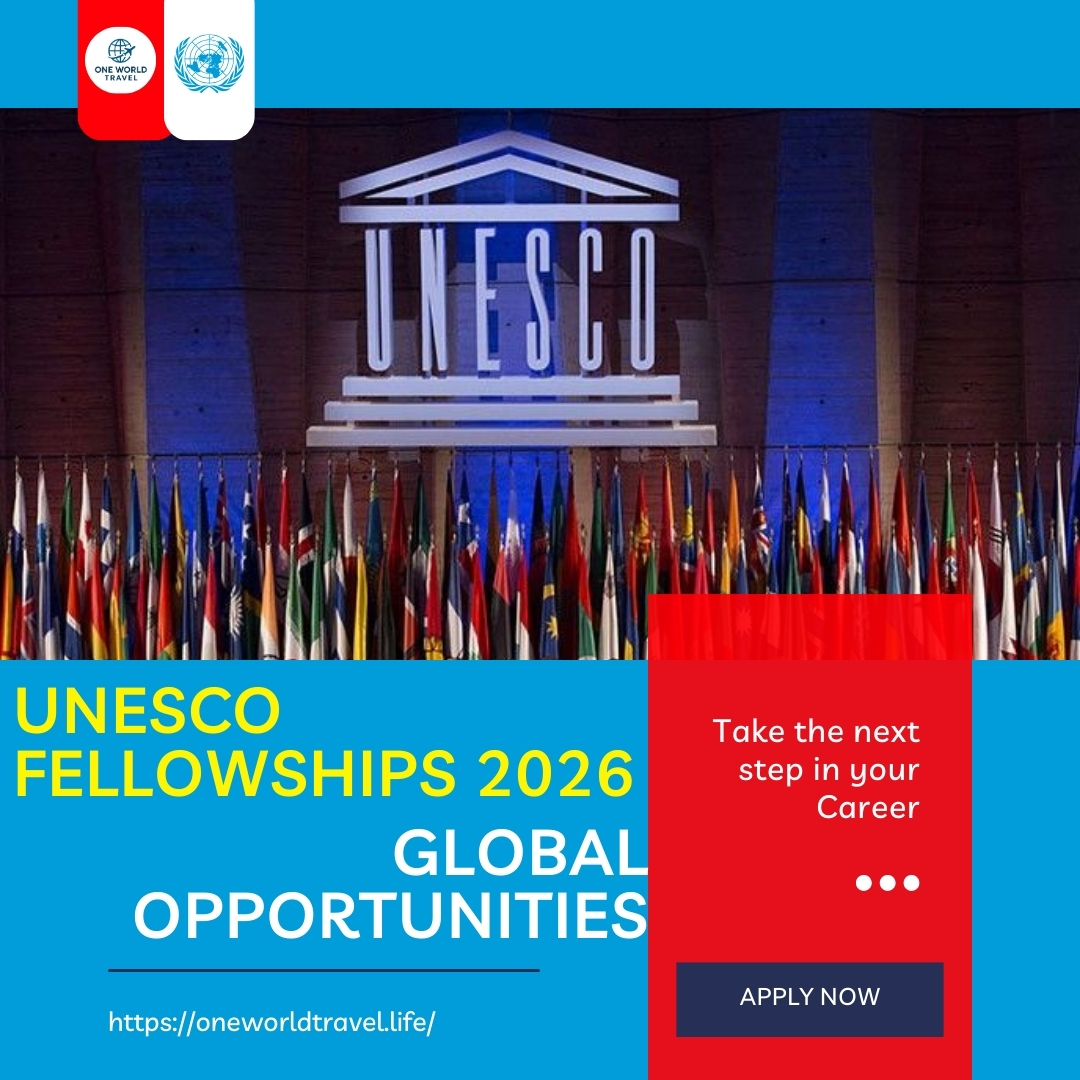
UNESCO Fellowships 2026 – Paid Global Opportunities for Young Professionals
Apply for UNESCO Fellowships 2026 and gain international experience in education, science, and culture. Fully funded, mentorship, and global networking included.